


f you've been browsing luxury kitchen or bathroom inspiration lately, you've probably noticed unlacquered brass faucets appearing everywhere—from timeless farmhouse kitchens to elegant modern interiors. Their warm golden tone and naturally evolving finish have made them one of the most sought-after choices among homeowners, designers, and architects.
Unlike standard brass fixtures that maintain the same polished appearance year after year, unlacquered brass is a living finish. It changes over time, gradually developing a unique patina that tells the story of your home. No two faucets age exactly the same, making every piece truly one of a kind.
Whether you're planning a complete renovation or simply upgrading your faucet, this guide will explain everything you need to know about unlacquered brass, including its benefits, maintenance, durability, and whether it's the right choice for your space.
Questions that we are going to answer in this article :
- What Is Unlacquered Brass?
- How Is It Different from Lacquered Brass?
- Why Does Unlacquered Brass Develop a Patina?
- Is Patina a Good Thing?
- How Long Does Brass Take to Age?
- Benefits of Unlacquered Brass Faucets
- Are There Any Drawbacks?
- Where Can You Use Unlacquered Brass?
- How to Clean an Unlacquered Brass Faucet
- Frequently Asked Questions
What Is an Unlacquered Brass Faucet?
An unlacquered brass faucet is made from solid brass without a protective clear coating. Because there is no lacquer sealing the surface, the brass naturally reacts with oxygen, moisture, oils from your hands, and everyday use.
Over time, the faucet develops a rich patina that deepens its color and character. Instead of looking worn out, the finish becomes warmer and more sophisticated, giving the fixture a timeless, handcrafted appearance.
This natural aging process has made unlacquered brass especially popular in luxury kitchens, boutique hotels, and designer bathrooms.

How Is Unlacquered Brass Different from Lacquered Brass?
Although both finishes begin with solid brass, they behave very differently over time.
| Unlacquered Brass | Lacquered Brass |
|---|---|
| Ages naturally | Maintains the same appearance |
| Develops a unique patina | Protected by a clear coating |
| Living finish | Static finish |
| Every faucet becomes unique | Looks identical for years |
| Easy to restore if polished | Lacquer can wear or peel over time |
If you love materials that evolve and gain character, unlacquered brass is often the preferred choice.

Why Does Unlacquered Brass Develop a Patina?
Brass is an alloy made primarily of copper and zinc. When exposed to air and moisture, its surface undergoes natural oxidation.
This isn't damage—it's a protective process that creates the beautiful patina many homeowners intentionally seek.
Several factors influence how quickly the finish changes:
- Humidity
- Water minerals
- Frequency of use
- Skin oils
- Cleaning habits
- Climate
A faucet used several times a day in a busy kitchen will age differently from one installed in a guest bathroom.
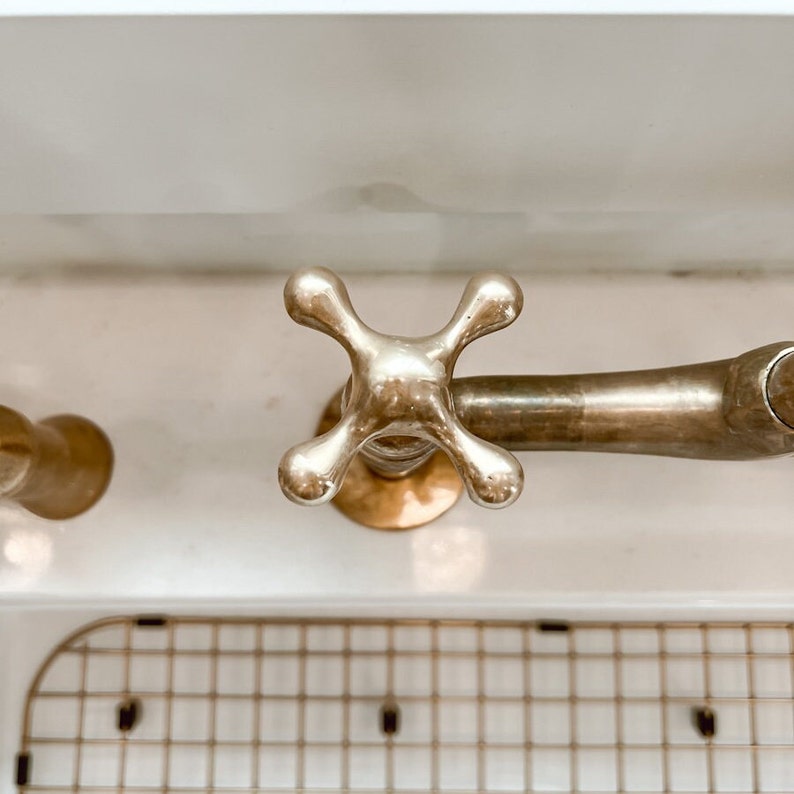
Caption: "Natural patina begins appearing in areas that receive the most frequent contact."
How Long Does Unlacquered Brass Take to Age?
Every home is different, but the process generally follows a predictable timeline.
| Time | Appearance |
|---|---|
| Day 1 | Bright golden brass |
| 1 Month | Slight softening of shine |
| 3 Months | Warm honey tones begin appearing |
| 6 Months | Rich golden-brown finish develops |
| 1 Year | Distinctive handcrafted patina |
| Several Years | Deep antique brass appearance |
Some homeowners enjoy watching the finish evolve naturally, while others occasionally polish certain areas to create a balanced look.
Why Homeowners Love Unlacquered Brass Faucets
1. Every Faucet Becomes Unique
No two faucets age exactly alike. Your faucet develops its own personality based on how your family uses it.
2. Timeless Appearance
Unlike trendy finishes that may go out of style, unlacquered brass has been used in luxury homes for centuries.
It complements:
- Farmhouse kitchens
- English country homes
- French provincial interiors
- Mediterranean designs
- Traditional homes
- Transitional spaces
- Modern organic interiors
3. Natural Beauty
Instead of hiding wear, unlacquered brass celebrates it.
Small changes in tone and texture add warmth and authenticity that manufactured finishes cannot replicate.
4. Easy to Refresh
If desired, the surface can be polished to restore much of its original shine. Many homeowners choose to polish only certain areas while allowing the rest of the faucet to age naturally.

Caption: "Unlacquered brass complements both traditional and contemporary kitchens."
Are There Any Drawbacks?
Like any premium material, unlacquered brass isn't the right choice for everyone.
It may not be ideal if you:
- Want a perfectly uniform finish forever
- Prefer low-maintenance, factory-finished fixtures
- Don't enjoy natural aging
However, if you appreciate authentic materials that evolve over time, these changes are considered part of the faucet's charm rather than imperfections.
Where Can You Use Unlacquered Brass?
Unlacquered brass is suitable for many areas of the home, including:
Kitchens
- Bridge faucets
- Pull-down faucets
- Pot fillers
- Bar faucets
- Soap dispensers
Bathrooms
- Sink faucets
- Shower systems
- Tub fillers
- Towel bars
- Robe hooks
Outdoor Spaces
High-quality solid brass fixtures can also be used outdoors, where they develop an even more distinctive patina due to weather exposure.
How to Clean an Unlacquered Brass Faucet
One of the biggest misconceptions is that unlacquered brass requires constant maintenance.
In reality, it requires very little.
Daily Cleaning
Simply wipe the faucet with:
- Warm water
- A soft microfiber cloth
Avoid abrasive pads or harsh chemicals.
For Deeper Cleaning
If mineral deposits appear:
- Mix warm water with mild dish soap.
- Wipe gently.
- Dry immediately with a soft cloth.
If You Prefer a Brighter Finish
Use a brass polish occasionally according to the manufacturer's recommendations. Keep in mind that polishing removes some of the natural patina, so many homeowners polish selectively or infrequently.
Avoid
- Bleach
- Ammonia
- Abrasive powders
- Steel wool
- Harsh acidic cleaners
Frequently Asked Questions
Does unlacquered brass rust?
No. Brass does not rust like iron or steel. Instead, it develops a protective patina that enhances its appearance over time.
Will fingerprints show?
Initially, yes. Fingerprints may be visible on a new faucet, but they gradually blend into the developing patina and become much less noticeable.
Is unlacquered brass safe for kitchens?
Yes. High-quality solid brass faucets are widely used in kitchens and bathrooms. Always purchase fixtures that meet the applicable plumbing and safety standards for your region.
Can I stop the patina from developing?
Not permanently. The only way to prevent aging would be to apply a protective coating, which would change the nature of an unlacquered finish. Occasional polishing can temporarily restore a brighter appearance.
Is unlacquered brass worth it?
For homeowners who appreciate craftsmanship, natural materials, and timeless design, many consider unlacquered brass to be one of the finest faucet finishes available.
Final Thoughts
An unlacquered brass faucet is more than just a plumbing fixture—it's a piece that evolves with your home. From its warm golden glow on installation day to the rich patina it develops over the years, it brings a sense of authenticity that few modern finishes can match.
Whether you're designing a cozy farmhouse kitchen, a luxurious bathroom, or an elegant outdoor space, unlacquered brass offers lasting beauty, durability, and individuality.
Rather than resisting the passage of time, it embraces it—creating a finish that's uniquely yours.

